

I start every single Village Pride walking tour with a road map of what we’ll be seeing and talking about over the course of the two-hour experience. I think it’s important to provide guests with a sense of what’s the come. I say something to the effect of, “We’ll start with post-World War II, moving chronologically through homophile activism, Stonewall, Gay Liberation, AIDS advocacy, and more, and we’ll end with modern day. Because as we know, LGBTQ+ history is not a closed chapter in a history book, it’s something that is still being written every single day.” And in my heart, I know that to be true. The fight for LGBTQ+ rights has been ongoing for generations, and yet, in some ways, it also feels like it has only just begun. What do we do now? How do we continue paving the way forward? Those questions, without a doubt, will be asked at the end of our tour, after participants see and learn about so many movements within the larger fight for LGBTQ+ equality, the inevitable question is, “What now?”
As someone who started an LGBTQ+ walking tour company, I look for answers in the context of our history. I don’t believe we need to reinvent the wheel of queer activism (and actually, older queer activists have affirmed that this). Instead, I ponder, how we can use the lessons from previous movements, from elder queer activists, and apply them to our modern day life, circumstances, and situations. Because of this, I look up to so many queer activists who have paved the way for me. I know that if it wasn’t for their tireless activism, I wouldn’t have the freedoms that I have today as an openly queer man. Operating an LGBTQ+ walking tour company in New York City means that, naturally, my work allows me to meet many queer ancestors who have inspired me. And the one question I always ask is, “What advice do you have for the younger generation?” I want to know, from their perspective, how we can continue in their footsteps, what we can do to inspire positive social change, and what they think would be the best way forward.
One activist that I particularly admire, and that I was fortunate enough to meet once, is Peter Staley. Peter is the author of Never Silent: ACT UP and My Life in Activism, as well as an ACT UP NY and TAG (Treatment Action Group) alumnus. He’s also one of the main subjects in David France’s book and documentary, How to Survive a Plague, which is what originally inspired me to start Christopher Street Tours.
Color me surprised, then, when Peter Staley wrote this, in a recent Instagram post:
“If you are under 40, do not ask those of us with gray hair what to do. Trust your own instincts. You will have better answers than we will.”
As an advocate under the age of 40, I suppose it’s easy for me to always turn to the older activists for advice, rather than turning inward and trusting my own instincts. Even reading Peter’s words, I’m not sure I fully believe that I have better answers than he would. Yet, I understand the sentiment, and history teaches us that Peter is correct. Throughout history, so many movements have been started by young people who trusted their own instincts, who, in many cases, didn’t listen to older generations. They did what they thought was best and forged their own path, often starting a movement.
There’s power not only in asking yourself “what can I do?” but then also trusting your own response. While I still believe that we can turn to and learn from older queer activists, there’s also power in asking ourselves how we can move forward, how to take this moment in time and turn it into our own movement.



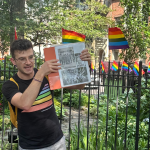

Love that quote – while we honor and love our queers with grey hair (and I have plenty, despite being under 40) we must also be empowered to find our own places in the story of queer liberation!
Love! And I also have plenty of grey hairs, despite being under 40! 😆